
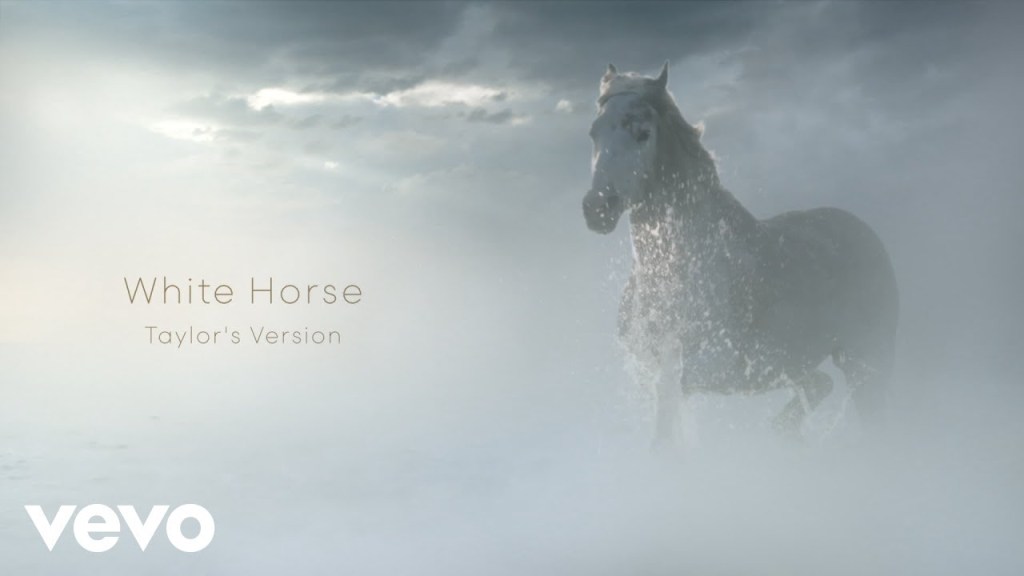
“To me, “White Horse” is about what, in my opinion, is the most heartbreaking part of a break-up – that moment when you realize that all the dreams you had, all those visions you had of being with this person, all that disappears. Everything after that moment is moving on. But that initial moment of “Wow, it’s over” is what I wrote “White Horse” about.”
— Taylor Swift
“All I ever wanted was the truth.”
— Hidden message in liner notes
In my personal now-thirteen-year journey of being a Swiftie, there are three Taylor Swift songs that hold a special place in my heart due to their significance in making me the fan I am today: there’s my personal favorite song of hers, there’s the song that made me a Swiftie, and there’s the first song of hers that I ever heard. Last week, I wrote about my personal favorite song, “Enchanted,” and next week I will write about the first song of Taylor’s that I ever heard (stay tuned for that). This week’s entry in The Manuscript focuses on a song that, while not necessarily on my short list of favorite Taylor songs, is still incredibly significant to me because, due to a perfect storm of factors, “White Horse” is the song that made me a Swiftie.
Before I get into analyzing the song, let’s briefly flashback to September of 2011. I had just started my freshman year of high school in a new school district where I didn’t know anyone (except my mother, who taught there) and was in an emotionally vulnerable place. One of my electives that year was a Theatre Arts class, in which one of the introductory activities was an in-class talent show. During this show, one of my fellow students in the class who I thought was cute sang a song that I had never heard before but was immediately taken with. I asked her afterward what it was, and she said, “‘White Horse’ by Taylor Swift.” Naturally, after school that day, I bought the song on iTunes, which soon led me to buying the Fearless album, and then soon after I owned all three of Taylor’s studio albums (plus her Christmas EP). So while I obviously knew who Taylor Swift was before September 2011 (something I’ll talk more about next week), hearing “White Horse” that day at school was the first domino to fall that led to me becoming the die-hard fan I am today.
And in many ways, “White Horse” was the appropriate song to be that first domino. Even more than many of her most popular songs in the early part of her career (i.e., “Our Song,” “Love Story,” “You Belong with Me,” etc.), “White Horse” perfectly encapsulates the ability Taylor has to poetically capture a specific feeling at a moment in time and make it artistically compelling for nearly four minutes. In this case, it’s heartbreak, one of the central themes she is known for and that many not-very-educated people think is all she writes about (it’s not, not even close). But what makes this particular heartbreak song even more significant is its position on the Fearless album, being placed (a) just two songs after “Love Story,” which is a direct prequel to “White Horse,” and (b) as Fearless‘ Track 5. Even more than “Cold As You” from Debut, “White Horse” solidified the fifth track on a Taylor Swift album as a place of extra vulnerability and pain, though not necessarily from heartbreak (i.e., “Delicate,” “The Archer,” “You’re on Your Own, Kid”). And while “Dear John” and “All Too Well” would eventually make the Track 5 legendary among Swifties, the significance of it really started with “White Horse”.
The opening chords of “White Horse” immediately distinguish it from the upbeat and hopeful sounds of the previous two tracks on Fearless (both “Love Story” and “Hey Stephen”), as the finger-picked acoustic guitar, while still melodic and slightly bouncy, evokes the feeling of a heartbroken Taylor sitting in her room with her guitar plucking the strings to let out her turbulent mixed emotions in that moment where her fairytale fantasy has been shattered. As she continues plucking the strings, delicate cello and piano enter the sound mix, firmly cementing the song in melancholy so that even before she starts singing, you can feel her disappointment and heartache. But then when she does start singing, her soft, tender vocal pierces through the sparse arrangement and cuts deep emotionally, particularly as her lyrics reveal her inner pain:
Say you’re sorry that face of an angel comes out just when you need it to
As I paced back and forth all this time ’cause I honestly believed in you
Holding on, the days drag on
Stupid girl, I should have known, I should have known
While the direct callbacks to “Love Story” won’t come until the chorus, this song’s first verse does directly call back to the “angel” imagery from “Hey Stephen,” with Taylor shattering the illusion from that song and revealing how the “angel” face and appearance, in this case, was really just a form of gaslighting to keep her from seeing who her significant other truly was. While she doesn’t yet divulge the nature of her ex-lover’s deceit, Taylor does depict the immediate effect this deceit had on her, as she vividly describes “pacing back and forth,” “holding on” as “the days drag on” and she beats herself up for not having seen his true nature. In many ways, this scene — almost certainly taking place in Taylor’s bedroom — functions as a direct inverse of the final verses from “Enchanted”. Rather than the lovestruck anxiety driving her pacing back and forth and getting up in her own head in that song, this first verse in “White Horse” depicts a heartbroken depression that results in days feeling like centuries and Taylor racking her brain to understand how she could have possibly believed in the false image he was presenting to her.
And while the first verse is certainly powerful in setting the stage for the song and the heartbreak therein, it is in the chorus where Taylor explicitly presents “White Horse” as a mature, disillusioned sequel to “Love Story,” where the Romeo and Juliet fairy tale has been replaced by reality and she will not entertain any more delusions of chivalry from this boy:
That I’m not a princess, this ain’t a fairy tale
I’m not the one you’ll sweep off her feet, lead her up the stairwell
This ain’t Hollywood, this is a small town
I was a dreamer before you went and let me down
Now it’s too late for you and your white horse to come around
Especially when listened to in the context of the album, just two songs after “Love Story,” the first two lines of the chorus hit even harder, as Taylor is intentionally recreating the emotional whiplash she experienced from the romantic deception and heartbreak that inspired the song by instantly going from the romantic highs of both “Love Story” and “Hey Stephen” to the melancholy of “White Horse”. And for her to further go one-by-one in deconstructing the entire setting of “Love Story” by refuting the idea of her being a princess, their story being a fairy tale, and that he would ever sweep her off her feet and lead her up the stairwell of her castle comes off as particularly biting. But even more than that, the following line, where she establishes the small-town setting, one familiar to Taylor at this point, single-handedly destructs the 16th century Romeo and Juliet setting of “Love Story” by grounding it instead in her small Tennessee town, one that allows her (and us) to see her significant other as a loser small-town boy rather than some sort of heroic Romeo figure, ultimately ending the chorus with the assertion that, even if he were to put on that “face of an angel” and heroically try to win her back, it would be far too late because she sees him now for who he really is.
As the song moves on to the second verse, Taylor begins to reveal slightly more about the nature of the relationship and how it ended, while mostly still dwelling on her romantic dreaming to move past those fantasies:
Maybe I was naive,
Got lost in your eyes
And never really had a chance
Well, my mistake, I didn’t know to be in love
You had to fight to have the upper hand
I had so many dreams
About you and me
Happy endings
Now I know
Here, continuing to show her developing maturity after many of the songs on love and heartbreak that she wrote for Debut, Taylor acknowledges both her own naivete in having all of these dreams and fantasies about their love story, as well as her significant other’s domineering control. While most of the actual nature of the relationship is hidden from the lyrics, the idea that she ever had to fight this boy to have the upper hand in their relationship strongly hints at one-sidedness and manipulative gaslighting going well beyond selective angel-facing. Just as she will do later with certain songs on Speak Now and Red, Taylor’s songwriting about heartbreak doesn’t simply show pettiness or anger toward her ex-boyfriend, it shows the actual pain that comes from being taken advantage of and controlled in a one-sided relationship by a boyfriend who only wants to use her rather than love her.
And after one last repeat of the chorus, Taylor moves on to the bridge, where she finally finds herself in a situation where she has power in the relationship, as her boyfriend pleads with her to forgive him for the way he treated her and to take him back. And while she briefly acknowledges that this is the situation she always wanted, for him to profess his love for her in a dramatic way, apologize for what he did wrong, and actually say how much he wants her, she now sees through him and his empty promises and refutes his desperate pleas:
And there you are on your knees,
Begging for forgiveness, begging for me
Just like I always wanted but I’m so sorry
Following Taylor’s expertly drawn-out “so sorry” lyric, she moves on to a brilliant rewrite of the earlier chorus that powerfully asserts her newfound power in this dynamic with her controlling now-ex-boyfriend and finally puts any hope of reconciliation to bed, instead showing how she is moving forward with newfound maturity and sense of self toward a brighter romantic future outside of their small town:
Cause I’m not your princess, this ain’t a fairy tale
I’m gonna find someone someday who might actually treat me well
This is a big world, that was a small town
There in my rearview mirror disappearing now
And it’s too late for you and your white horse
Now it’s too late for you and your white horse, to catch me now
Oh, whoa, whoa, whoa
Try and catch me now
Oh, it’s too late
To catch me now
In this final rewritten chorus, only the “princess,” “fairy tale,” and titular “white horse” callbacks to “Love Story” remain, showing how, in this moment, Taylor’s romantic dreams of this boy are continuing to fade further and further away. Rather than be with someone whose grand gestures are enough to fuel fantasies of being “swept off her feet” and led “up the stairwell,” Taylor is now determined to find a man who will simply treat her well, who won’t make her fight for the upper hand. And having previously moved on from a Hollywood imagining of the 16th-century Romeo and Juliet setting to the small Tennessee town where they are, Taylor is now moving forward from even that to the bigger world outside, actively leaving behind that town and the boy who charmed and used her in it. And despite being let down by him and being temporarily deluded into thinking he and the town were different, she will continue to move forward with her life, driving fast enough that this guy and his imaginary white horse (the false bravado that he possesses) cannot try to catch her or slow her down no matter how hard they try.
So while Taylor might have written “White Horse” about the initial moment of “Wow, it’s over,” the actual song ends on a bright moment of hope, with the melancholy music lifting up slightly like the sun rising from the east in front of Taylor as she drives out of the town, smiling and baiting her loser ex on his “white horse” to even try to catch her. It’s a beautiful, cathartic moment at the end of a sad song, one that further cements its status as one of Taylor’s most underappreciated Track Fives. It is not simply a “sad girl” breakup song. It is one that simultaneously shatters the fairy tale of “Love Story” and points toward an even better way forward, one in which Taylor (and we) can realize that we deserve better than to be used in relationships and can find the strength in the ashes of a breakup to drive off toward a better and brighter future. And while, as she says in the song’s hidden message, “All I ever wanted was the truth,” she did ultimately find the real truth about herself and what she deserves, and that is the ultimate message of “White Horse”.
____________________________________________________________________________________
What’s fascinating about the development of “White Horse,” other than it being written soon after “Love Story” about the same guy, is that, despite it being one of the original Taylor Track Fives and the second single from Fearless following “Love Story”, it almost didn’t even make the album, as Taylor correctly realized that there were several other sad post-breakup songs included in the track listing (i.e., “Breathe,” “You’re Not Sorry,” later “Forever & Always”). However, thanks to her agency setting up a meeting with the executive producers of her favorite TV show, Grey’s Anatomy (whose protagonist, Meredith Grey, was the namesake for Taylor’s first cat), Taylor was able to play “White Horse” for them and they ended up using the song in the two-part premiere of Season 5. Aired just a month and a half before the album’s release, the song is prominently featured, ironically, in a romantic scene where the characters Cristina and Owen kiss for the first time:
Once Fearless was released, Taylor, realizing by this point how special the song was, wasted no time in prominently showcasing it in various places. Just in the first month after the album’s release, she performed the song at a special private performance at the Taylor Guitars Factory in El Cajon, California, and on stage at the American Music Awards, The Tonight Show with Jay Leno, and the Grammy Nomination concert. They’re all great performances in their own ways (and are all available to watch on YouTube, but the Grammy Nomination concert performance is my personal favorite, as she brilliantly mashes up “White Horse” with a searing partial rendition of Brenda Lee’s “I’m Sorry” that absolutely blows the roof off the venue. Watch the magic happen below:
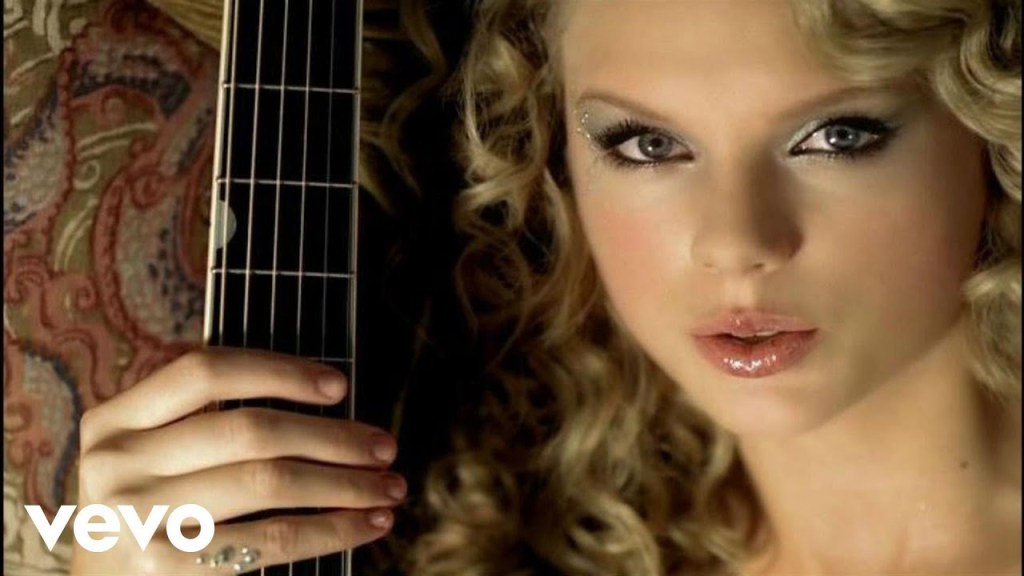
Just five days after this performance, “White Horse” was officially released as the second single from Fearless. While the song spent just one week on the Billboard Hot 100, debuting and peaking at, appropriately for Taylor, #13, it became a massive country hit, eventually becoming the #2 country song in America shortly before the Fearless Tour started in April 2009, only held off from #1 by Darius Rucker’s “It Won’t Be Like This for Long” (“White Horse” would later go on to win both Best Country Song and Best Female Country Vocal Performance at the 2010 Grammys, the same ceremony where Fearless won Album of the Year). Significantly aiding its popularity in the country world was the song’s music video, which premiered on CMT that February and became the first video ever to debut at #1 on their weekly Top 20 Countdown. The video, amazingly filmed in one day, seemingly follows the template that Taylor had used for her earlier “Picture to Burn” video, including distinct characters, dialogue and a narrative arc inspired by the song, but in this case, significantly expands on the story told in the lyrics by Taylor casting herself as the “other girl” unwittingly dating a married man and slowly finding out about his double life. It’s easily one of Taylor’s most underrated videos from this era.
Following the start of the Fearless Tour, “White Horse” was, not surprisingly, a nightly part of the set list, performed in the album arrangement with the spotlight always on Taylor and her carefully heartbreaking delivery of the lyrics. However, in a choice that comes off as painfully ironic in retrospect, just a month into the tour, at Taylor’s first-ever performance at the Staples Center in Los Angeles (a venue that would quickly become steeped in Taylor history), she brought up none other than future ex-boyfriend John Mayer to perform the song with her. While only captured on audience-shot video, this performance of the song is still incredibly significant, both as a time capsule and as a stark warning that 32-year-old John should have heeded before messing with 19-year-old Taylor and getting an even more searing breakup song written about him:
Since the end of the Fearless Tour, Taylor has performed “White Horse” only a handful of times, always as a Surprise Song (somehow, she never once played it on the Speak Now Tour, where it would have made a powerful pairing with “Dear John”). I’ll leave with the two most powerful post-Fearless Tour performances, both of which were also performed with special guests. The first was also at the Staples Center on the 1989 Tour when Taylor brought up Orange is the New Black‘s Uzo Aduba to duet on the song with her, and the result is a powerful country-soul arrangement that elevates the song further:
And the second was from earlier this year on the Eras Tour in Sydney, when Taylor brought up opener (and protégé) Sabrina Carpenter to duet on a stripped-down piano version of the song during the Surprise Song set. While not quite as soulful as Uzo Aduba’s vocals, Sabrina’s vocals, combined with Taylor’s, still add a lovely touch to the song, especially when the song moves seamlessly into “Coney Island,” a song that unexpectedly but perfectly mashes up with “White Horse” and gives it an even more mature feel. It’s without question one of my favorite mashups she’s done on the Eras Tour.





Leave a comment